


You can’t build up a vocabulary if you never meet any new words…
When discussing data at work, using the right words is crucial. Business narrative vocabulary involves using simple, clear language to convey numbers and facts in a way that everyone can understand. This helps people see why the data matters and what they should do next. Without the right words, your story can sound confusing or dull, and people might miss your main point.

Why Business Narrative Vocabulary is Essential
The right vocabulary makes the data more relatable. It clarifies context and highlights the journey from problem to resolution. Using the right words helps bring data to life. It makes the context clear. It also shows the journey from problem to solution.
This approach not only boosts understanding but also enables an emotional connection. Remember, people FEEL the numbers and the narratives. They are often personally linked to them. Without a robust business narrative vocabulary, data stories risk becoming dull and uninspiring. They can become technical or misunderstood. This limits their potential to influence and inspire. And you can do better than that!
My few thoughts on where to practice your Business Narrative Vocabulary

Building narrative fluency is a skill that improves with deliberate practice. Here are some actionable ways to hone your business narrative vocabulary:
- Read and Listen Widely: Immerse yourself in business blogs, industry news, podcasts, and TED Talks. Absorb how professionals structure their stories. Notice how they use vocabulary in authentic contexts. One very good source for Business terminology is Earnings Calls. Pick 10 publicly traded companies. Go to their websites. Find Investor Relations and go to Earnings Calls replays or Transcripts.
- Even more, you can use Gen AI to help you with that. Here is what I have done:
- Downloaded a sample earnings (Microsoft) call transcript (here)
- Uploaded the file to my GenAI (I use Perplexity Pro) and started from scratch with the following prompt:
- Even more, you can use Gen AI to help you with that. Here is what I have done:
“Please create for me the best prompt that I can use to extract a valuable Business language from the recent MSFT Earnings call that I can learn and build my Business Storytelling vocabulary.“
I took it and adjusted it for my scenario. It produced a summary for me of all the relevant vocabulary from the call. Try it for any company.
- Keep Vocabulary Notebook: Create your own “business dictionary.” Jot down new terms and phrases. Include their meanings and example sentences. Please review and update it regularly.
- Practice in Real Situations: Use new vocabulary in emails, presentations, meetings, or even informal conversations. Role-play business scenarios with colleagues or friends to test your storytelling in a safe environment.
- Shadow and Imitate: Repeat phrases from business podcasts or videos, and analyze how experienced storytellers build their narratives. Try to mimic their style and adapt it to your own stories.
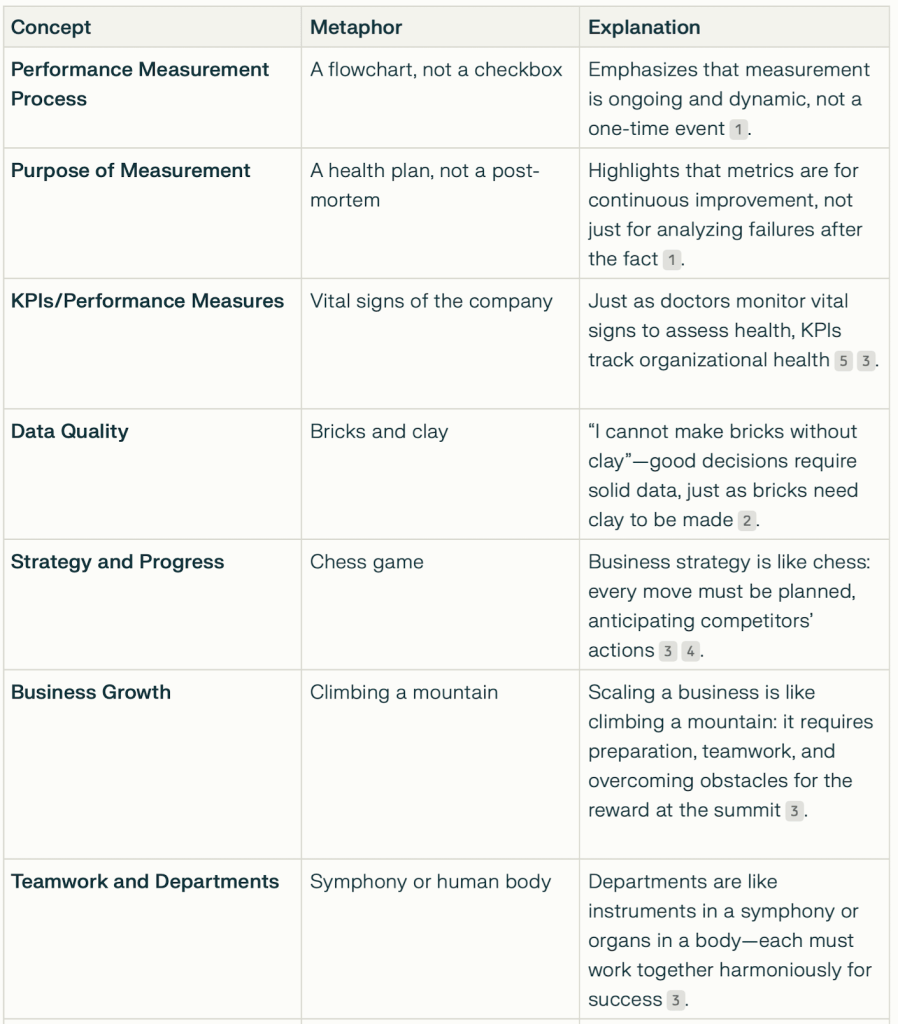
I like when leaders are using metaphors when conveying a business narrative
A few funny and witty examples below:
Summary
Using the right business words helps you turn data into stories that everyone can understand and remember. You can practice by reading, listening, writing down new words, and incorporating them into real-life situations. Don’t be afraid to ask for feedback or join a workshop. With practice, you’ll improve your storytelling skills. You can make people pay attention and take action. This is possible even if you’re not a professional storyteller!
For a free downloadable resource, click the Chart Decision Tree and Compare Visual Guide.


Leave a comment